
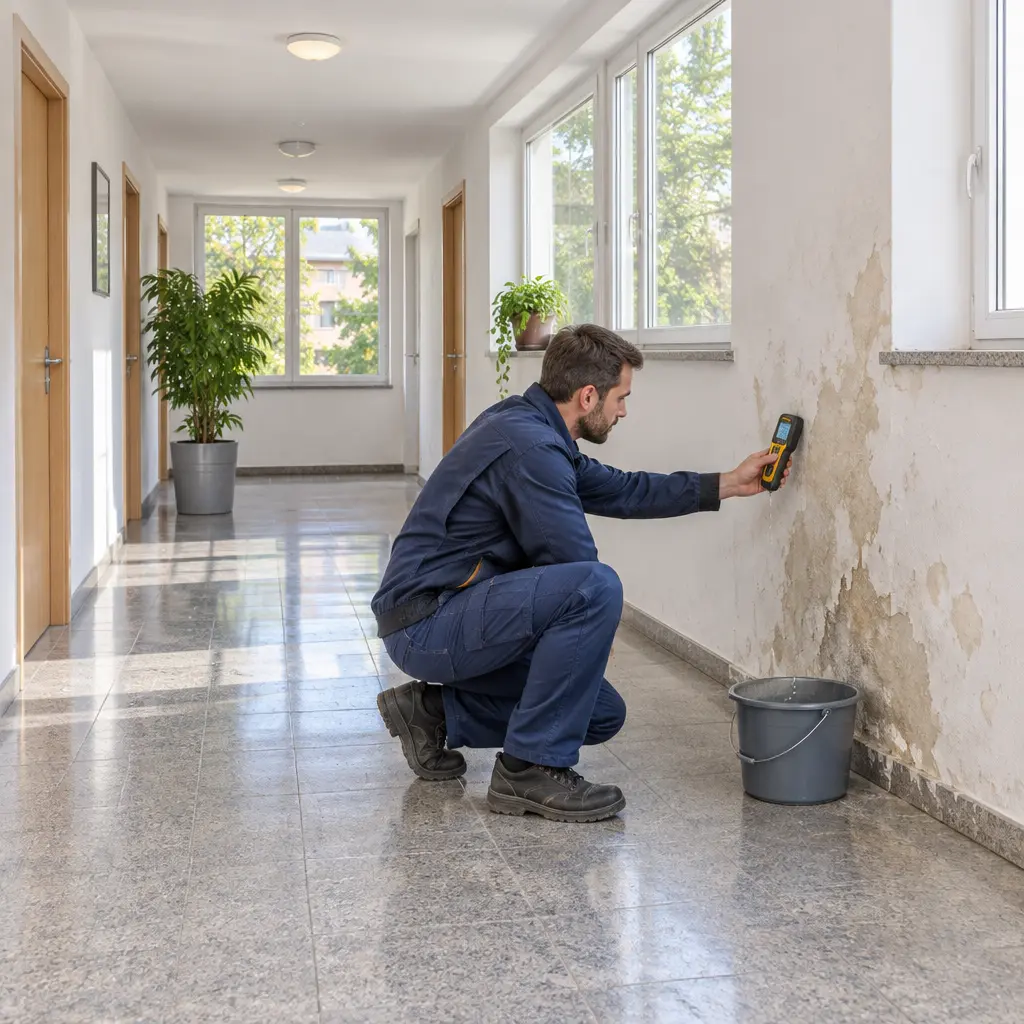
Water-damage triage is the process of identifying, stopping, and repairing water intrusion according to its risk to people, building materials, and property; cosmetic grooming covers lower-urgency work such as paint touch-ups, surface polishing, and minor finish repairs. When both compete for time or budget, address active leaks, standing water, and wet or contaminated materials before cosmetic work. The U.S. Environmental Protection Agency (EPA) advises drying water-damaged areas within 24–48 hours to help prevent mold growth. A sound protocol therefore ranks hazards, contains the source, documents damage, dries and restores affected areas, and postpones cosmetic finishing until moisture and safety concerns are resolved.
Prioritizing Water-Damage Repair in Maintenance Triage
Maintenance triage is a structured way to sort reported problems by urgency, consequence, and required response. For water damage, the practical priority is not simply how visible a stain looks: it is whether water is still entering, whether occupants face electrical or contamination hazards, and whether moisture is spreading into concealed materials. Cosmetic grooming may improve appearance, but it generally does not stop deterioration or make a wet space safe.
The distinction has measurable implications. The EPA’s 24–48-hour drying guidance makes prompt action important, while the Federal Emergency Management Agency (FEMA) warns that floodwater may contain sewage, chemicals, and other contaminants. These facts support a sequence that puts life safety and source control first, drying and remediation next, and cosmetic restoration last. The specific response should be adjusted to the water source, affected materials, building conditions, and applicable professional guidance.
Defines Water-Damage Repair Priority and Maintenance Triage
Water-damage repair priority is the ranking of water-related maintenance tasks according to immediate danger, ongoing exposure, potential damage, and the time-sensitive steps needed to limit loss. The EPA’s mold guidance does not define a universal triage system, but its recommendation to dry wet materials within 24–48 hours provides a practical urgency benchmark. In a maintenance protocol, that benchmark sits alongside a first rule: protect people and stop the source before attempting routine finish work.
Common categories include emergency response, urgent water removal and drying, repair of damaged building systems, and deferred cosmetic work. These are operational categories rather than a substitute for building codes, insurance requirements, or professional assessments. A small ceiling stain caused by an active pipe leak may be more urgent than a large but fully dry scuff because the former signals continuing water entry.
Life-safety and contamination hazards
Life-safety triage identifies conditions that could injure occupants or responders. Examples include water near electrical equipment, sagging ceilings, unstable flooring, sewage backup, and floodwater of uncertain quality. The Centers for Disease Control and Prevention (CDC) cautions that floodwater can expose people to germs and hazardous substances; avoid contact when contamination is suspected and follow local public-health instructions. If water is near energized electrical systems, occupants should keep clear and contact qualified emergency or utility personnel rather than entering the area.
Active leaks and source control
Source control means stopping or isolating the water entry before repairing finishes. This may involve shutting off a fixture or supply line, arranging a roof or plumbing repair, or contacting emergency services when a situation is unsafe. Drying without stopping the leak can allow damage to recur; painting over a stain can conceal evidence without correcting its cause. Where the source is uncertain or hidden, a qualified plumber, roofer, or water-damage professional may be needed to investigate.
Moisture-sensitive materials and mold prevention
Moisture-sensitive materials include carpet and padding, insulation, drywall, ceiling tiles, and wood products. Their ability to be dried and retained depends on how wet they became, how long they remained wet, contamination, and the material’s condition. The EPA recommends drying wet areas and items within 24–48 hours to help prevent mold, but this is not a guarantee that mold will not develop. Hidden cavities may require professional moisture assessment, and contaminated or severely damaged porous materials may need removal.
Applies a Risk-Based Repair Sequence Before Cosmetic Grooming
A risk-based sequence turns the priority definition into repeatable action. It separates emergency hazards from restoration tasks and prevents appearance-focused work from masking unresolved moisture. The order below is a practical framework; serious incidents, contaminated water, or structural concerns call for qualified professionals and local authority guidance.
1. Protect occupants and restrict unsafe access
First, identify immediate hazards and keep people away from unsafe areas. Do not walk through floodwater or approach wet electrical equipment. If there is a risk of structural failure, gas exposure, or electrical shock, leave the affected area and contact the appropriate emergency, utility, or building professional. The CDC’s flood-cleanup guidance emphasizes protective measures because floodwater and cleanup conditions can create health risks.
2. Stop the water and document the incident
Once it is safe, isolate the source if possible and arrange a lasting repair. Record the date, source if known, affected rooms, and visible damage with photographs or written notes. Documentation can help maintenance teams track recurrence and support discussions with insurers or contractors. It should not delay urgent action to stop water or protect occupants.
3. Remove water and dry affected areas
Water removal and drying limit the duration of exposure. Use appropriate equipment only when conditions are safe, and seek professional help when water is extensive, contaminated, or trapped in concealed spaces. The EPA’s 24–48-hour guidance is a useful prompt to begin drying quickly, not a deadline that makes every material safe to keep. Building owners should verify drying rather than relying solely on the surface feeling dry.
4. Repair, verify, then restore finishes
Repair damaged plumbing, roofing, drainage, or building components and check that the source has been corrected. Assess whether affected materials can be cleaned and dried or must be removed. Only after the area is dry, safe, and free of unresolved moisture should teams replace finishes, repaint, polish, or perform other cosmetic grooming. A new coat of paint over damp material can conceal rather than solve a continuing problem.
Distinguishes Emergency, Urgent, and Cosmetic Maintenance
A tiered system helps maintenance teams assign work consistently. The categories below are examples, not universal response-time standards; organizations should set service levels based on building use, staffing, local regulations, and the potential consequences of delay.
Emergency: immediate threat or uncontrolled water
Emergency cases include rapidly spreading water, suspected sewage, water in contact with electrical systems, or signs of structural instability. The response is to protect people, restrict access, contact emergency or qualified professionals, and stop the source only when it is safe to do so. Cosmetic work has no place in this phase.
Urgent: contained source but wet materials remain
Urgent cases involve a leak that has been stopped but leaves wet flooring, walls, ceilings, or contents. Prompt assessment, water extraction, drying, and decisions about material removal are still important. The EPA’s 24–48-hour recommendation for drying underscores why these tasks should not be displaced by routine appearance work.
Routine or cosmetic: no active moisture or safety issue
Routine grooming includes repainting a repaired and dry wall, replacing a finish for appearance, or polishing surfaces. These tasks can improve comfort and presentation, but should be scheduled only after the cause and moisture consequences have been addressed. If a stain reappears, the issue should be re-triaged as a possible unresolved leak rather than repeatedly covered.
Uses Documentation and Verification to Prevent Repeat Damage
A useful maintenance record connects the initial report to the completed repair. Log the reported location, suspected source, actions taken, materials affected, drying or inspection findings, and any follow-up work. This creates an evidence trail for recurring leaks and helps teams distinguish a genuinely completed repair from a cosmetic concealment.
Moisture checks and closeout criteria
Closeout should be based on conditions, not appearance alone. Depending on the incident, verification may include confirming that the leak is stopped, checking affected materials with suitable moisture-measurement methods, inspecting adjacent or concealed areas, and documenting any professional remediation. There is no single moisture threshold that applies to every material and building; use qualified judgment and manufacturer or industry guidance where relevant.
A simple triage chart for maintenance teams
The following text chart illustrates the order of operations. It is a prioritization aid, not a substitute for site-specific emergency procedures.
Life-safety or contamination hazard → restrict access and contact qualified responders; active water entry → isolate the source and arrange repair; wet materials → remove water, dry, and assess; verified dry and repaired area → restore finishes and complete cosmetic grooming.
Conclusion: Repair Water Damage Before Cosmetic Grooming
Water-damage triage ranks work by safety, source control, moisture exposure, and the consequences of delay. The EPA’s 24–48-hour drying guidance supports rapid attention to wet materials, while CDC and FEMA guidance reinforces the need to treat floodwater and cleanup hazards carefully. A reliable protocol protects occupants, stops the water, documents the damage, dries and assesses affected materials, verifies the repair, and only then restores appearance.
Property owners and maintenance teams should review their escalation procedures, identify qualified plumbing and restoration contacts, and make sure staff know when to keep people out of an area. For further guidance, consult the EPA’s mold resources, CDC flood-cleanup recommendations, FEMA flood-safety information, and applicable local building and public-health authorities.
Sources: U.S. Environmental Protection Agency, Mold Course Chapter 2: Why and Where Mold Grows, https://www.epa.gov/mold/mold-course-chapter-2; Centers for Disease Control and Prevention, Safety Guidelines: Floodwater, https://www.cdc.gov/floods/safety/floodwater-after-a-disaster-or-emergency.html; Federal Emergency Management Agency, Floodwater Safety, https://www.ready.gov/floods.


