Community stewardship models are organized ways for riders to turn their enthusiasm for trails, bike parks, and other shared riding places into trained, dependable volunteer work. They connect local knowledge and participation with practical needs such as trail maintenance, safety, education, and habitat care. The model matters because participation is already substantial: the Outdoor Industry Association’s 2023 report estimated that 168.1 million Americans ages six and older participated in outdoor recreation in 2022, while the International Mountain Bicycling Association (IMBA) has long identified volunteer labor and local partnerships as central to sustainable mountain-bike trail systems. Effective programs make that energy useful by defining tasks, training volunteers, coordinating with land managers, and recognizing contributions.
Community stewardship models organize rider enthusiasm into skilled volunteer labor
A community stewardship model is a structured arrangement through which riders, clubs, nonprofits, public agencies, and landowners share responsibility for the care and appropriate use of recreation spaces. It is more than an informal work party: the model establishes permission, roles, safety expectations, skill development, communication, and accountability. The National Park Service’s Volunteers-In-Parks program illustrates the broader principle that volunteer service should support an agency’s mission under an agreed framework, rather than replace professional staff or operate without oversight.
For riding communities, the central conversion is from interest to capability. A person who loves a trail may become a trained sawyer, trail crew lead, ride ambassador, youth mentor, or monitoring volunteer—but only when the organization supplies a clear pathway. A practical stewardship system therefore combines project selection, instruction, supervision, tools, insurance and risk procedures, and feedback about what the work accomplished.
Why enthusiasm needs an operating structure
Unstructured enthusiasm can produce duplicated effort, unsafe work, unauthorized trail changes, or volunteer burnout. A stewardship program reduces these risks by agreeing on priorities with the land manager, matching tasks to demonstrated skills, and documenting work. The U.S. Forest Service’s volunteer and partnership guidance emphasizes coordination with agency staff and compliance with land-management requirements—an important safeguard where trail work affects drainage, vegetation, cultural resources, or public access.
The scale of outdoor participation makes this organization consequential. Outdoor Industry Association reported that outdoor recreation contributed $1.2 trillion to U.S. gross domestic product in 2022, according to the U.S. Bureau of Economic Analysis’s outdoor recreation satellite accounting. Those figures describe a broad economic sector, not the value of volunteer hours alone; they nevertheless show why maintaining safe, resilient recreation infrastructure is relevant to communities and public agencies alike.
Volunteer pathways develop the skills behind community stewardship models
A volunteer pathway is a sequence of increasingly responsible roles supported by instruction, practice, and supervision. It gives newcomers an accessible entry point and experienced participants a route into specialist or leadership work. The Independent Sector’s annual value-of-volunteer-time estimate can help nonprofits communicate the economic scale of service, but the figure is a national valuation benchmark—not a measure of the quality, local cost, or replacement value of any particular trail project.
Trail maintenance and construction crews
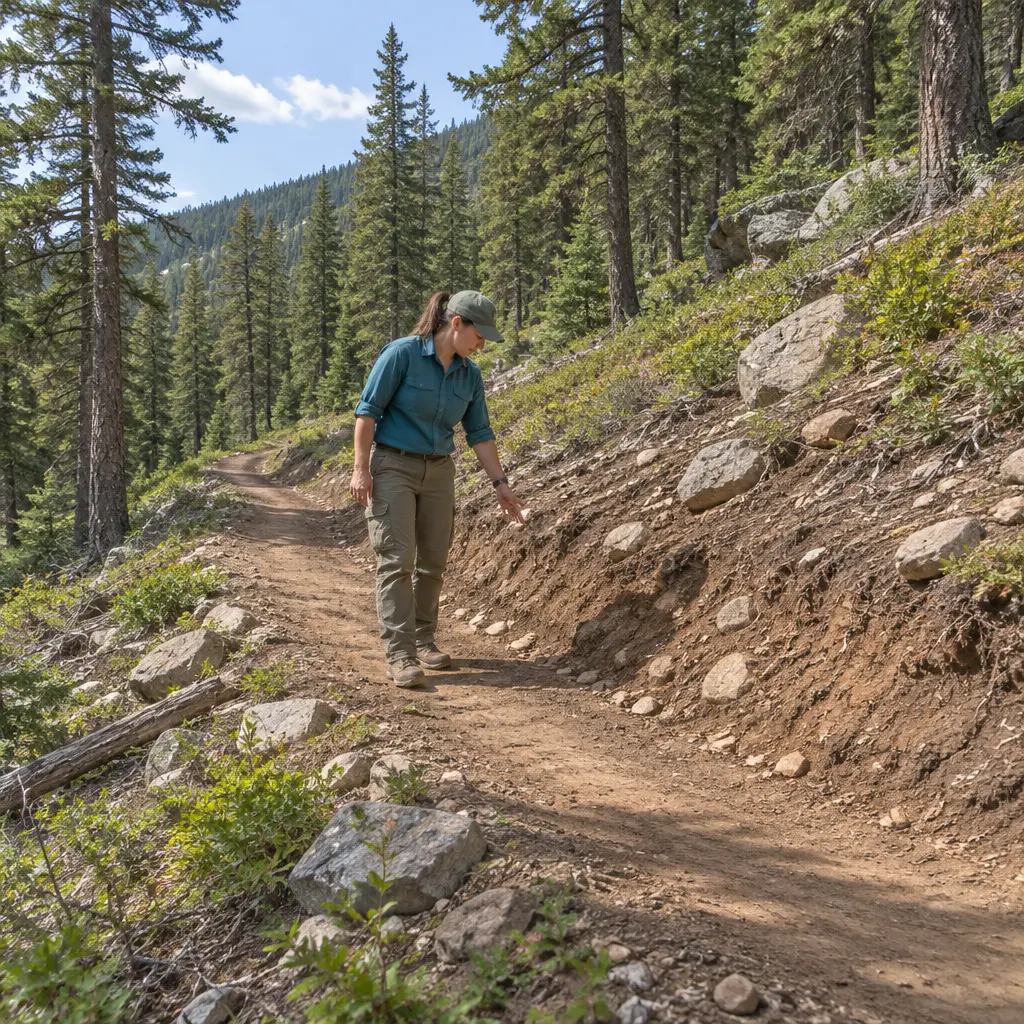
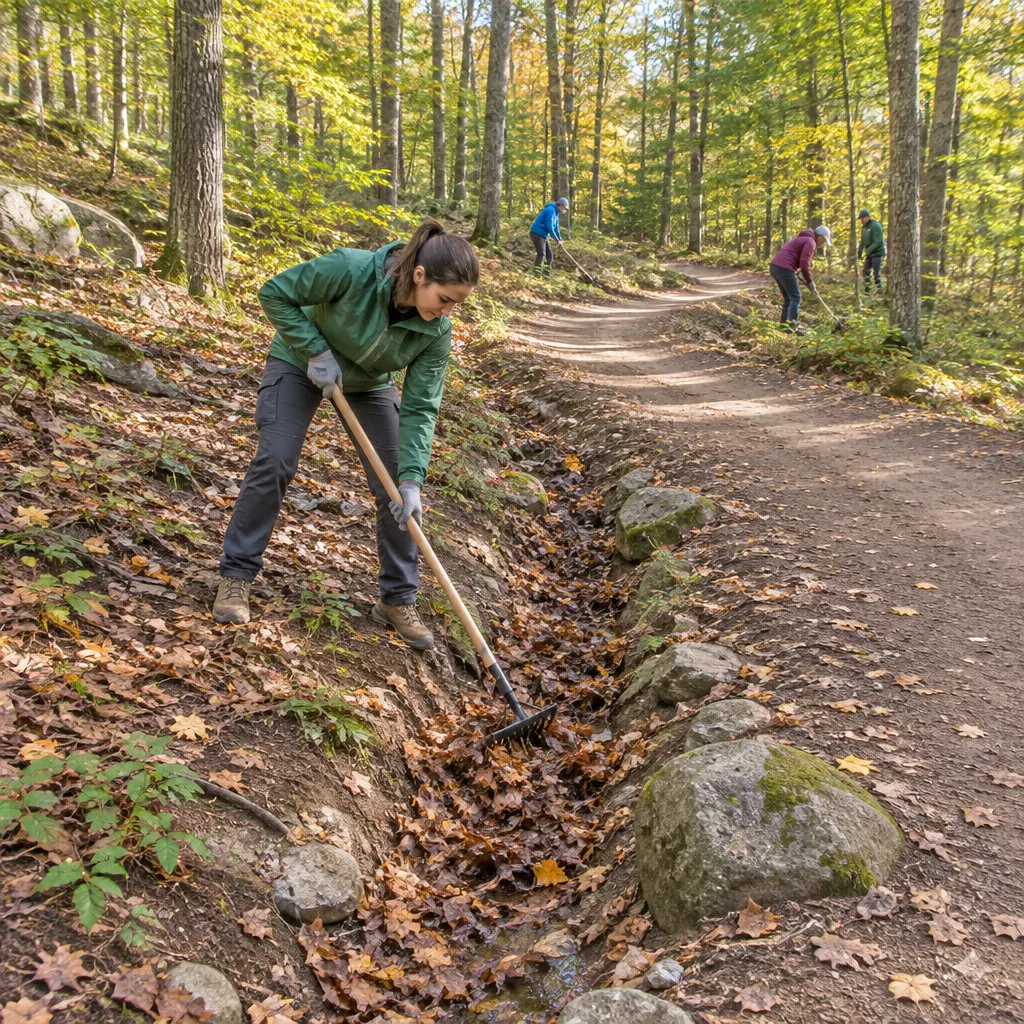
Trail crews maintain tread, clear drainage, repair erosion, and build or improve approved routes. These tasks require more than strength: volunteers need to understand water movement, sustainable grades, soil conditions, tool use, and the limits of the approved project. IMBA’s trail-building resources promote sustainable design principles, including attention to drainage and alignment, while land managers determine what work is authorized on their property.
Programs can progress from low-risk activities—such as removing litter or cleaning drainage features—to supervised tool work and crew leadership. Training should identify which tools volunteers may use, what protective equipment is required, how to report hazards, and when work must stop. For projects involving chainsaws, heavy equipment, or complex construction, organizations should rely on appropriately qualified personnel and the land manager’s safety rules rather than treating general volunteer orientation as specialist certification.
Ride ambassadors and trail stewards
Ride ambassadors and trail stewards support welcoming, informed, and responsible trail use. They may explain local rules, share etiquette, direct visitors to current information, report hazards, and help connect riders with the managing organization. Their role is not law enforcement or emergency response unless separately authorized and trained. Clear boundaries protect both the volunteer and the public.
The model is especially useful at busy trailheads, where brief, friendly interactions can clarify route difficulty, closures, right-of-way expectations, and seasonal restrictions. Programs should provide consistent messaging and a defined reporting channel so volunteers do not improvise policy. The National Park Service’s visitor-service and volunteer frameworks offer a useful public-land reference for pairing public engagement with agency oversight.
Youth mentoring and skills-based service
Youth stewardship links riding, outdoor learning, and civic participation. Mentored projects can introduce young riders to trail design, ecology, maintenance, and responsible recreation while developing teamwork and practical skills. IMBA’s youth-oriented programming and local mountain-bike organizations demonstrate how riding communities can pair instruction with supervised service; organizers should also follow applicable safeguarding, consent, transportation, and adult-supervision requirements.
Youth involvement should be designed as meaningful participation rather than a source of free labor. Age-appropriate tasks, visible learning goals, recognition, and opportunities to contribute ideas can build long-term connection. When participants see how drainage work, habitat protection, or visitor education improves a trail system, they can understand stewardship as a continuing relationship with place.
Partnerships and governance make community stewardship models durable
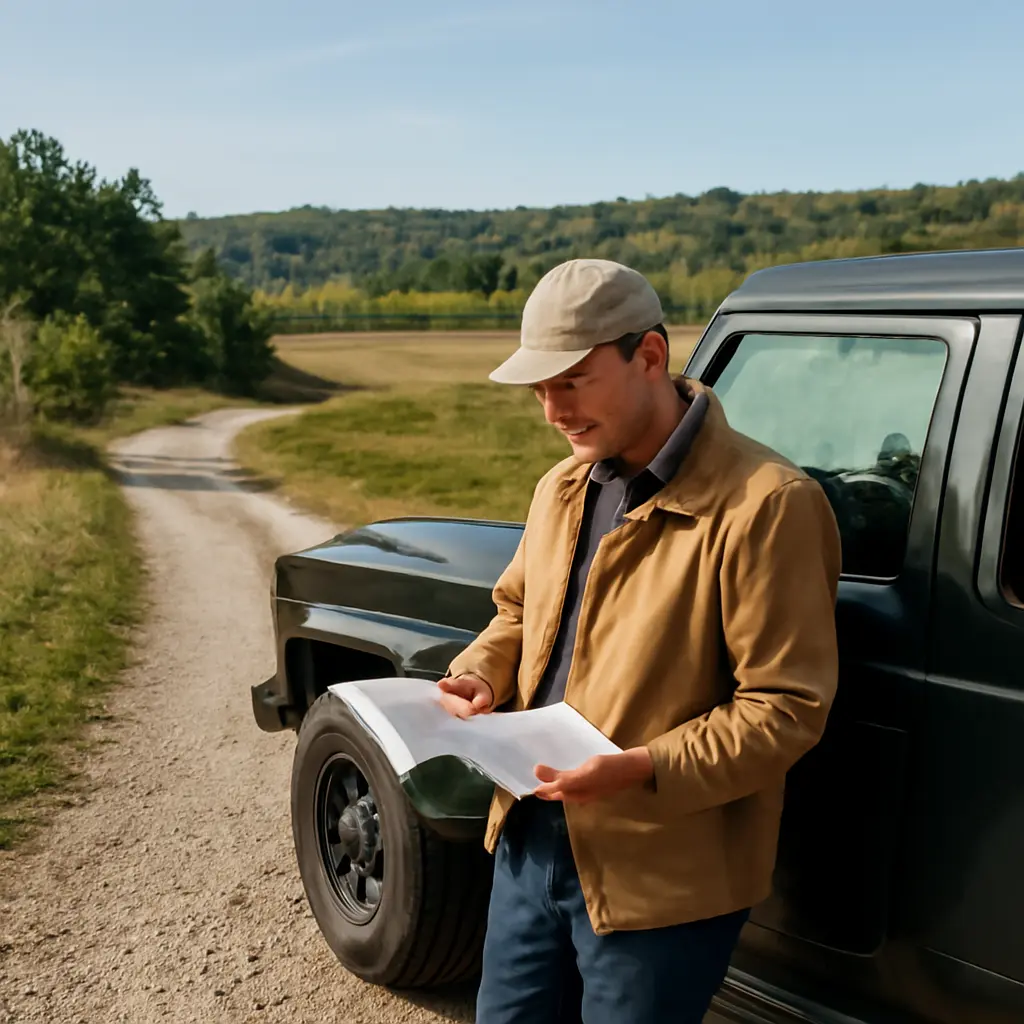
Governance defines who decides what work happens, who approves it, and who is responsible for safety and results. In a durable model, the riding organization does not assume that public access automatically grants permission to build or alter a trail. Instead, it works through the landowner or managing agency, agrees on priorities, and clarifies responsibilities in writing where appropriate.
Land-manager and nonprofit partnerships
A partnership joins the land manager’s authority and ecological knowledge with a community group’s local relationships, volunteer capacity, and riding expertise. IMBA’s Trail Solutions practice and partnership approach show how trail organizations can provide planning and technical support while coordinating with public agencies and other stakeholders. The precise arrangement varies by site: a municipal park, national forest, and privately managed trail network may each require different permissions, environmental review, and operating agreements.
A useful partnership agreement identifies approved locations and tasks, project contacts, training expectations, insurance and incident procedures, tool responsibilities, communication protocols, and how completed work will be inspected. It should also address access constraints such as wildlife seasons, fire danger, weather closures, and competing uses. These details reduce confusion and help preserve trust when plans change.
Inclusive recruitment and recognition
Inclusive recruitment widens the pool of people who can contribute and helps stewardship reflect the community that uses or lives near the trails. Practical measures include offering short and varied shifts, communicating task difficulty in advance, providing loaner tools and protective equipment when feasible, using accessible meeting locations, and creating roles that do not require advanced riding ability. Organizations should also ask participants what barriers they face rather than assuming that a single volunteer format works for everyone.
Recognition is part of retention, not a substitute for good program design. Timely thanks, skills records, references where appropriate, public acknowledgment with consent, and visible reporting of project outcomes help volunteers understand that their contribution mattered. The U.S. Surgeon General’s framework for workplace well-being emphasizes connection and community; although developed for workplaces, its focus on belonging offers a relevant principle for volunteer teams.
Evaluation shows whether community stewardship models produce lasting value
Evaluation is the practice of tracking whether a stewardship program is safe, useful, equitable, and sustainable. Counting volunteer hours alone is not enough: an hour of supervised drainage repair is not interchangeable with an hour of visitor outreach, and hours do not establish whether a project improved trail conditions. A balanced dashboard combines participation, skills, work quality, safety, and environmental or visitor outcomes.
Useful measures for volunteer programs
Organizations can track the following indicators, using consistent definitions and reporting periods:
- Volunteer recruitment, repeat participation, retention, and leadership progression.
- Training completed, task-specific competencies demonstrated, and supervision provided.
- Approved work completed, such as drainage features cleared, hazards reported, or trail sections inspected.
- Incidents, near misses, corrective actions, and compliance with land-manager requirements.
- Participant feedback, representation across the community, and barriers identified or reduced.
A simple annual chart could compare volunteer hours and repeat-participant rates with completed maintenance tasks, training milestones, and safety reports. The chart should distinguish outputs—such as workdays held—from outcomes, such as reduced recurring erosion at a monitored location. Reporting both kinds of evidence keeps the program from overstating what raw participation totals can prove.
Burnout prevention and continuity
Burnout prevention means designing service so the same small group is not expected to carry every task indefinitely. Organizations can rotate responsibilities, divide large projects into manageable shifts, appoint deputy leads, document procedures, and maintain a calendar that accounts for weather and seasonal demand. A succession plan is particularly important when one volunteer holds essential knowledge about tools, agency contacts, or site history.
Continuity also depends on realistic commitments. Volunteer programs should not promise maintenance levels that available people, funding, or agency capacity cannot sustain. When the work exceeds volunteer expertise or presents elevated risk, the responsible response may be to pause, seek professional support, or revise the project scope.
Conclusion: community stewardship models turn participation into shared responsibility
Community stewardship models convert rider enthusiasm into skilled volunteer labor by combining clear pathways, appropriate training, land-manager partnerships, inclusive participation, and meaningful evaluation. Trail crews, ride ambassadors, youth mentors, and other volunteer roles contribute in different ways, but all depend on permission, safety, supervision, and respect for the places being cared for.
For a riding organization beginning or improving a program, the next steps are practical: meet with the land manager, identify a small set of approved priorities, define entry-level and specialist roles, train and equip volunteers, and publish a simple annual report of work and learning. Riders who want to help can ask local clubs or agencies about scheduled workdays and training before undertaking trail work independently. With that structure, enthusiasm becomes a dependable community asset rather than an unmanaged promise.
Sources: Outdoor Industry Association, 2023 Outdoor Participation Trends Report, https://outdoorindustry.org/resource/2023-outdoor-participation-trends-report/; U.S. Bureau of Economic Analysis, Outdoor Recreation Satellite Account, U.S. and States, 2022, https://www.bea.gov/data/special-topics/outdoor-recreation; International Mountain Bicycling Association, Trail Solutions, https://www.imba.com/resource/trail-solutions; International Mountain Bicycling Association, Youth Programs, https://www.imba.com/youth; National Park Service, Volunteers-In-Parks Program, https://www.nps.gov/subjects/volunteer/index.htm; U.S. Forest Service, Volunteer and Service Programs, https://www.fs.usda.gov/working-with-us/volunteers; Independent Sector, Value of Volunteer Time, https://independentsector.org/resource/value-of-volunteer-time/; U.S. Surgeon General, Framework for Workplace Mental Health and Well-Being, https://www.hhs.gov/surgeongeneral/priorities/workplace-well-being/index.html.