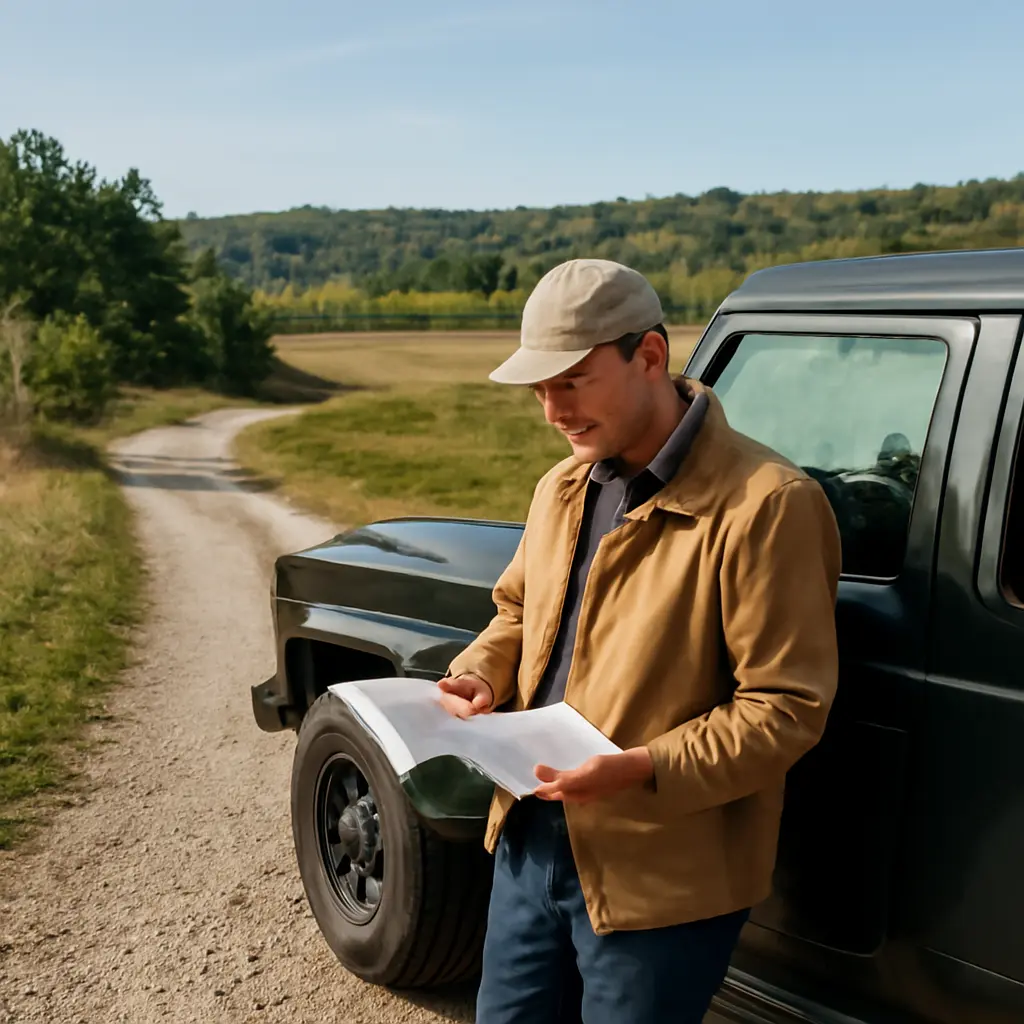
Terrain riding can turn a simple trip into a challenge: steep grades, loose surfaces, and repeated braking all demand more from a vehicle and its driver. A vehicle’s owner’s manual is the manufacturer’s guide to operating and maintaining that specific model; for off-road and rough-road use, it can clarify equipment limits, recommended settings, safe operating practices, and recovery precautions. Manuals do not guarantee a trouble-free ride, but consulting the right instructions before heading out can help prevent avoidable damage and improve decision-making when conditions change.
How owner’s manuals guide terrain driving
An owner’s manual is vehicle-specific operating guidance, not a general off-road certification. The National Highway Traffic Safety Administration (NHTSA) advises drivers to read their vehicle’s manual to understand its features and recommends following manufacturer instructions. That matters on challenging terrain because vehicles differ in ground clearance, drivetrain, tire requirements, towing capacity, and the operation of systems such as four-wheel drive and traction control.
A manual may explain which surfaces and conditions a vehicle is designed to handle, but the presence of four-wheel drive does not make every route safe. The driver must still assess weather, terrain, vehicle condition, passenger needs, and local access rules. As a practical first step, locate the manual’s sections on driving, tires, towing, maintenance, and emergency procedures; use the index or a searchable digital copy to find model-specific instructions.
Four-wheel drive and drive modes
Four-wheel drive (4WD) sends engine power to all four wheels under specified operating conditions; all-wheel drive (AWD) systems generally manage power distribution differently, and designs vary by model. The manual explains how to engage available modes, whether the vehicle must be stopped or moving, and whether a particular mode is intended for loose surfaces or low-speed obstacles. Follow those instructions rather than assuming that a control labeled “4WD,” “Lock,” or “Off-Road” works the same way across vehicles.
Some vehicles have a low-range setting for slow, controlled travel, while others do not. A manual may also warn against using certain modes on dry pavement, where drivetrain binding or excess wear can result on some systems. Before a difficult route, practice operating the controls in a safe location and learn how the vehicle indicates that a mode is engaged.
Ground clearance, approach, and departure limits
Ground clearance is the space between the vehicle’s underside and the ground. Approach and departure angles describe how steep an obstacle can be before the front or rear of the vehicle is likely to contact it; a breakover angle concerns the risk of the middle underside striking a crest. These measurements, when provided, help drivers compare a vehicle’s geometry with a route, but they do not account for every variable, including suspension movement, load, tires, or hidden rocks.
Use the manual’s specifications as planning information, not permission to attempt an obstacle. A vehicle that clears a feature when unloaded may not do so with passengers or cargo. If the route is unfamiliar, inspect it on foot when safe, choose a less demanding line, or turn around rather than relying on a specification alone.
How manuals support safer driving techniques
Once drivers understand the vehicle’s systems and limits, the manual can help connect those capabilities to terrain-specific decisions. The main categories include hills, slippery or loose surfaces, water, and tire pressures. These are not interchangeable conditions: a technique suited to gravel may be unsafe in deep mud or on a steep, wet slope.
Steep hills and controlled descents
A controlled hill descent uses an appropriate gear or vehicle feature to limit speed and reduce reliance on continuous braking. Depending on the model, the manual may describe engine braking, hill-descent control, or a low-range setting. Read the instructions before using these features, since operating conditions and limitations differ.
On a descent, avoid abrupt steering, acceleration, or braking that could unsettle the vehicle. Choose a route within the vehicle’s and driver’s capabilities, and do not begin a climb unless there is a safe plan for the far side. The manual’s guidance should be combined with recognized off-road training and a decision to turn back when traction or visibility is inadequate.
Mud, sand, gravel, and snow
Loose and slippery surfaces reduce or change tire grip. A manual may give advice about selecting a drive mode, using traction control, or responding to wheel spin. Some vehicles allow the driver to adjust or temporarily disable a system in particular circumstances, but that should only be done as the manufacturer directs; electronic stability and traction systems are important safety aids on ordinary roads.
Use smooth inputs and moderate speed, and avoid aggressive steering or acceleration. If a vehicle begins to lose momentum, repeated spinning can dig the tires in and worsen the situation. Route conditions can vary over short distances, so a surface that appears firm may conceal soft ground, water, or an abrupt drop.
Water crossings and flood risk
A water-fording depth, if a manufacturer provides one, is a model-specific limit under stated conditions—not a general guarantee of safety. The manual may specify a maximum depth, speed, or inspection procedure, but water can be deeper or faster than it looks, and currents can move vehicles. Never enter floodwater or a crossing when depth, flow, or the condition of the bottom is uncertain.
The U.S. National Weather Service warns that just 12 inches of fast-moving water can carry away a small car, while 18 to 24 inches can carry away larger vehicles. Those figures are flood-safety warnings, not permissible off-road crossing depths. After a water exposure, follow the manual’s instructions for inspection and servicing rather than assuming the vehicle is unaffected.
Tire pressure and tire limits
Tire pressure affects handling, heat, load capacity, and the risk of tire damage. The vehicle’s tire placard and owner’s manual provide the recommended pressures for normal operation and may include guidance for unusual loads or conditions. Do not substitute a generic pressure recommendation for the figures and limits that apply to the vehicle and tires in use.
Some experienced off-road drivers adjust pressure for certain surfaces, but lowering pressure changes how a tire supports the vehicle and can increase the risk of bead separation, sidewall damage, or overheating if speed and load are inappropriate. Consult the vehicle and tire manufacturers’ instructions, carry a reliable gauge and inflation equipment, and restore the specified road pressure before returning to paved travel.
How manuals prepare drivers for recovery and maintenance
Terrain driving can expose a vehicle to impacts, dust, water, heat, and heavy loads. The manual helps identify what to inspect and which recovery methods the manufacturer permits. This is especially important because recovery equipment attached to an unsuitable point can fail, and a snapped strap or cable can cause severe injury.
Recovery points and towing instructions
A recovery point is a vehicle component designed for a specified recovery purpose; it is not necessarily the same as a transport tie-down point or a light-duty towing eye. The manual may identify approved attachment points, towing limits, and procedures for moving a disabled vehicle. Never attach a recovery strap to an unverified part such as a suspension component, bumper cover, or axle.
Before leaving, check that the recovery gear is suitable for the vehicle and that everyone understands the plan. Keep bystanders away from tensioned lines, use equipment only as its manufacturer directs, and avoid improvised pulls. If the vehicle is in a dangerous position or the recovery exceeds the driver’s training and equipment, call a qualified recovery service.
Pre-trip checks and post-trip inspections
A pre-trip inspection checks whether the vehicle is ready for the planned route. Use the manual’s service schedule and inspection guidance to review tires, fluid levels, lights, brakes, battery condition, and any warning indicators. Confirm that the vehicle’s load, passengers, trailer, and accessories remain within the manufacturer’s limits.
After rough-road or water exposure, inspect tires and wheels, the underside, visible fluid leaks, and any parts that struck an obstacle. The manual may call for specific cleaning, inspection, or maintenance after severe use. If a warning light appears, steering or braking feels different, or a new noise develops, stop safely and arrange an appropriate inspection rather than continuing to assume the vehicle is sound.
Emergency planning and route decisions
An owner’s manual is only one part of preparation. NHTSA recommends planning trips and ensuring a vehicle is in good working order; for remote terrain, drivers should also share their route and expected return time, carry communication appropriate to the area, and bring water, suitable clothing, food, and basic emergency supplies. Check weather, closures, land-access rules, and local advisories before departure.
A useful real-world lesson comes from flood-safety guidance: water depth and road condition can change quickly, making a familiar route hazardous. The National Weather Service’s vehicle warnings reinforce a key principle for all terrain—the driver must reassess conditions in real time. A manual can explain what the vehicle can do; it cannot establish that a route is safe at that moment.
Conclusion: Let the manual shape the route
Owner’s manuals help drivers understand four-wheel-drive systems, vehicle geometry, terrain techniques, tire requirements, recovery points, and maintenance needs. Their model-specific instructions are valuable because capability and operating limits differ from one vehicle to another. Use those instructions alongside careful route planning, sound judgment, and appropriate training—and treat water, steep slopes, and uncertain conditions as reasons to stop or turn back. Before your next trip, review the manual’s off-road and emergency sections, verify your equipment, and choose a route that matches both your vehicle and your experience.
Sources: National Highway Traffic Safety Administration, “Safe Driving,” https://www.nhtsa.gov/vehicle-safety/vehicle-safety; National Weather Service, “Flood Safety,” https://www.weather.gov/safety/flood; National Highway Traffic Safety Administration, “Tires,” https://www.nhtsa.gov/vehicle-safety/tires.