Mountain biking beginners often lose control not because trails are impossible, but because they misjudge speed, terrain, braking, body position, or trail etiquette. These mistakes are avoidable: the International Mountain Bicycling Association (IMBA) advises riders to match their speed and technique to conditions, while the National Park Service stresses staying on designated routes and yielding appropriately. This guide explains common errors in preparation, riding technique, and decision-making, with practical ways to ride more safely and protect the trail.
Trail Riding Mistakes: Poor Preparation and Judgment
Preparation mistakes are choices made before or during a ride that leave a rider without the equipment, information, or judgment needed for the conditions. IMBA’s “Rules of the Trail” emphasize planning ahead, riding within your ability, and being prepared for emergencies. Because trails vary in difficulty, surface, weather, and remoteness, a route that feels manageable in one setting may be unsafe in another.
Choosing a Trail Above Your Skill Level
A trail’s difficulty rating is a guide to expected technical challenge, not a guarantee that every feature will be suitable for every rider. Beginners may mistake a familiar distance or a low elevation number for an easy ride, overlooking steep grades, loose rocks, exposed edges, or difficult descents. Check the trail description and current conditions, and choose a route that leaves room to build skills gradually. If a feature looks beyond your ability, dismount and walk around it where permitted.
Skipping Bike and Equipment Checks
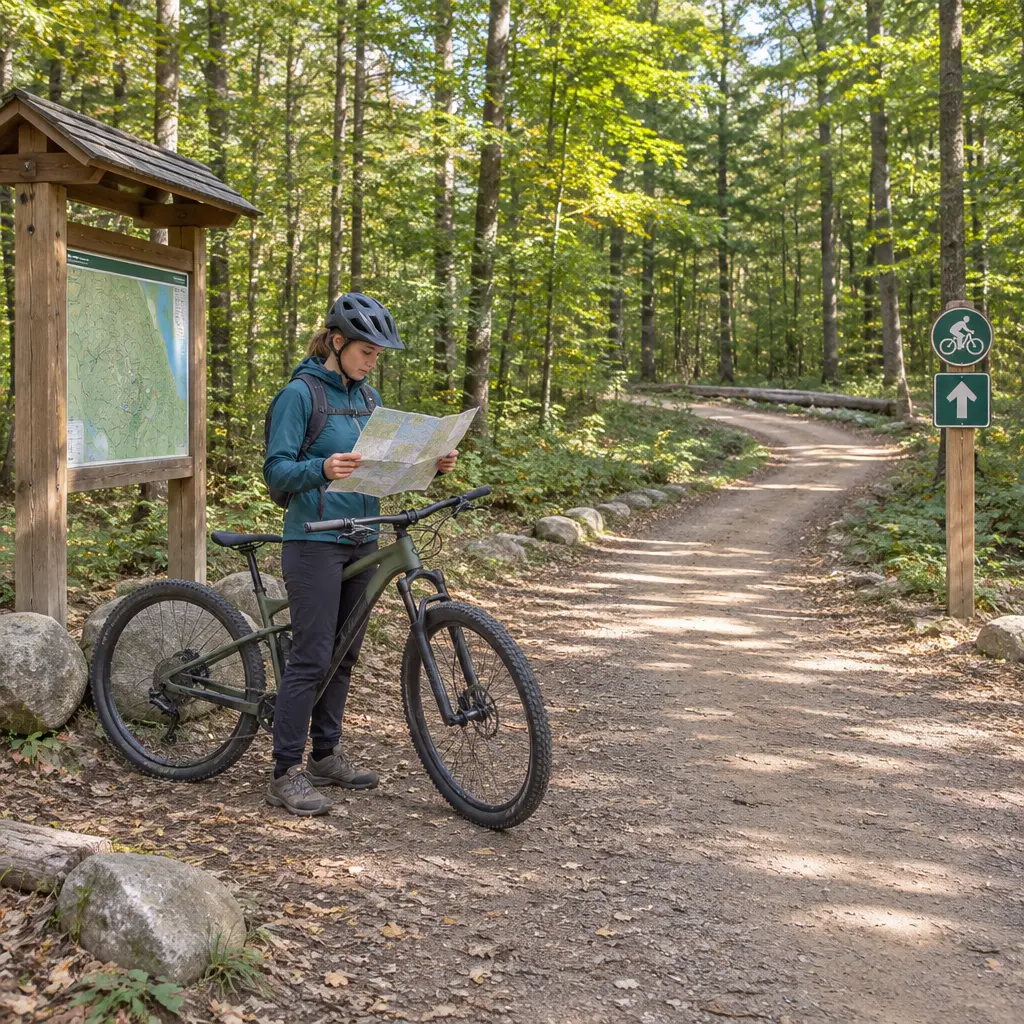
A pre-ride check means inspecting key components before heading onto the trail. Confirm that the brakes work, tires are properly inflated for the bike and terrain, wheels are secure, and the drivetrain shifts reliably. Bring water, a basic repair kit, a charged phone, and any route-specific essentials. The National Park Service recommends planning for the route and carrying supplies appropriate to the trip; a mechanical problem far from a trailhead can quickly become a safety issue.
Ignoring Weather, Trail Conditions, and Fatigue
Trail judgment includes recognizing when conditions or a rider’s physical state make a route riskier. Rain can reduce traction and, on some soils, cause lasting trail damage; heat, cold, and dehydration can also impair concentration. Fatigue often leads to late braking and poor line choices. Check local trail updates, adjust the plan to the conditions, and turn back or rest when control and attention begin to decline.
Riding Technique Mistakes: Braking, Balance, and Line Choice
Technique mistakes happen when riders use poorly timed inputs or a body position that does not suit the terrain. IMBA’s beginner guidance favors controlled speed, active balance, and looking ahead. These fundamentals connect closely: a rider who spots an obstacle early has more time to choose a line, adjust speed, and move the bike smoothly.
Braking Too Late or Grabbing the Brakes
Braking errors include waiting until a hazard is close, locking a wheel, or abruptly pulling the front brake. Sudden braking can reduce traction and destabilize the bike, particularly on loose or wet surfaces. Brake before a turn or technical feature when possible, use smooth pressure on both brakes, and reduce speed enough to remain in control. On descents, avoid dragging the brakes continuously, which can overheat components and make precise control harder.
Looking at the Front Wheel Instead of Ahead
Target fixation occurs when a rider stares at an obstacle rather than looking toward a safe path around or beyond it. The bike tends to follow the rider’s attention, leaving less time to react. Keep your gaze moving down the trail: look far enough ahead to anticipate the next feature, then briefly scan nearer terrain for immediate hazards. Practice this on easy ground before relying on it on steep or technical sections.
Using a Rigid Body Position
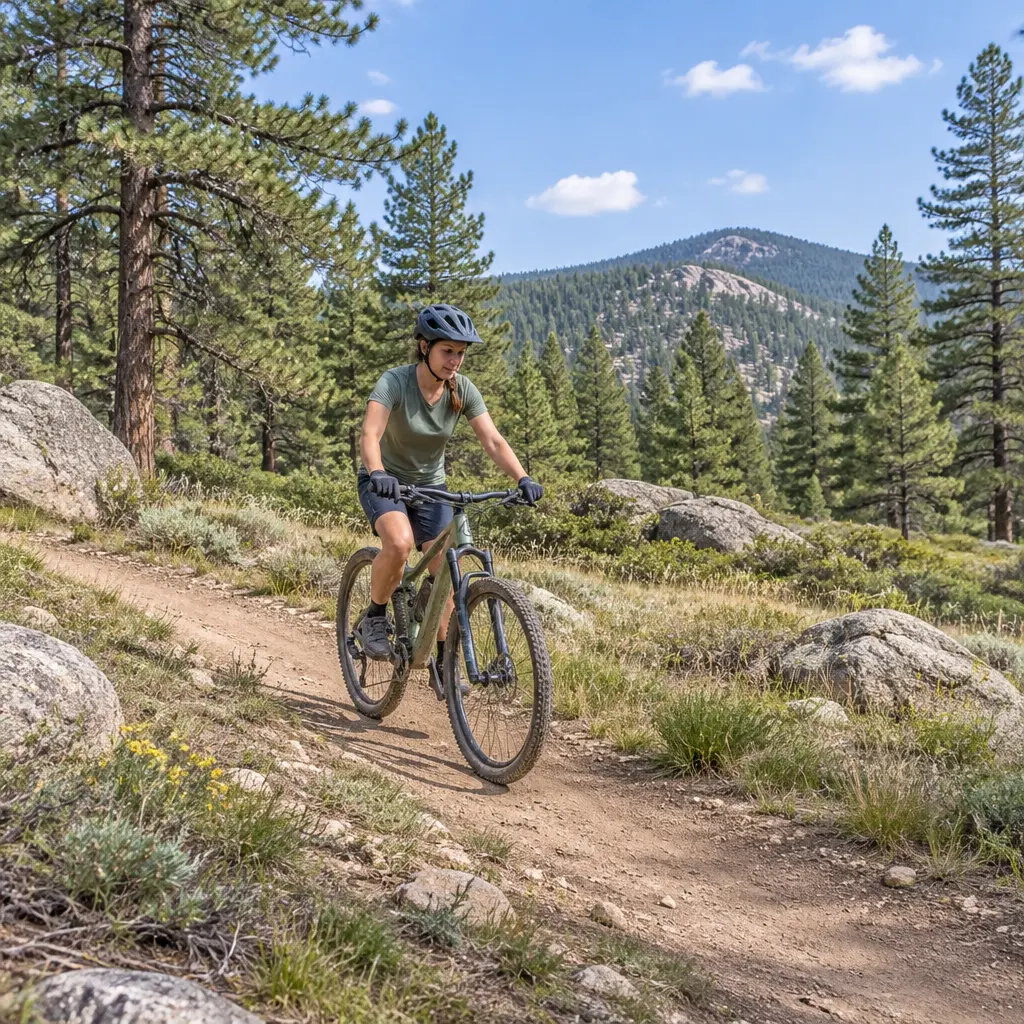
A rigid posture limits the bike’s ability to move beneath the rider and makes bumps harder to absorb. Keep elbows and knees slightly bent, hands relaxed, and weight balanced rather than locked over the handlebar or pushed too far behind the saddle. On descents, lower your center of gravity while remaining centered enough to steer and brake. The correct position changes with the terrain; avoid treating one exaggerated posture as a universal solution.
Choosing a Poor Line Through Obstacles
A line is the path a rider chooses through a trail feature. Beginners may focus on the largest rock or rut directly ahead instead of identifying a stable route around or over it. Scan the terrain early, favor a line that matches your skill, and avoid sudden steering changes while crossing an obstacle. If you cannot confidently ride a feature, stop in a safe place and walk it rather than attempting it under pressure.
Trail Etiquette Mistakes: Yielding and Protecting the Route
Trail etiquette is the set of shared practices that helps different users pass safely and limits damage to routes. IMBA and land-management agencies advise riders to stay on designated trails, communicate courteously, and yield according to local rules. Etiquette is not separate from safety: unexpected passing, blocked routes, and damaged surfaces can create hazards for everyone.
Failing to Yield or Announce a Pass
Yielding means giving another trail user space and time to pass safely. Rules can vary by trail, so check posted signs and local guidance; many shared-use trails expect cyclists to yield to hikers and equestrians. Slow down well before approaching, give a friendly verbal warning, and pass only when there is enough room. When meeting a horse, follow the rider’s instructions, since a startled animal can endanger both its handler and nearby cyclists.
Leaving the Designated Trail
Riding off the established route to bypass mud, a queue, or a difficult feature can widen the trail and damage vegetation or soil. The National Park Service advises visitors to remain on designated routes and follow site-specific rules. If conditions are poor, turn around or choose another open trail rather than creating a new line. Respecting closures also helps land managers protect sensitive areas and maintain trails responsibly.
Riding Too Close to Others
Tailgating reduces reaction time and can cause collisions when the rider ahead brakes or encounters an obstacle. Leave enough space to stop safely, especially on descents, and avoid pressuring another rider to go faster. If you want to pass, wait for a suitable, visible section and ask courteously. Group riders should also leave space between one another rather than bunching up on narrow trails.
A Beginner’s Practical Routine for Safer Trail Riding
A simple routine can prevent many common mistakes by turning preparation and good judgment into repeatable habits. Before riding, review the route, check the bike, and confirm that the trail is open. During the ride, manage speed early, look ahead, and communicate. Afterward, note what felt difficult and practice those skills in a controlled setting.
- Choose a route that fits your current ability, not the ability you hope to have later.
- Check brakes, tires, wheels, and drivetrain; carry water and basic repair and communication supplies.
- Ride at a speed that allows you to stop within the visible, clear trail ahead.
- Look through turns and around obstacles, keeping your arms and legs relaxed.
- Follow local yielding rules, announce passes, and respect closures and designated routes.
- Walk features that feel unsafe, and stop or shorten the ride when fatigue affects control.
Common beginner mistakes on mountain bike trails usually stem from rushing, riding beyond current ability, or overlooking how a rider’s choices affect others and the environment. Better preparation, smooth braking, active balance, thoughtful line choice, and considerate trail etiquette make rides safer and more enjoyable. Start on suitable trails, practice fundamentals progressively, and consult local land managers and IMBA resources before exploring unfamiliar routes.
Sources: International Mountain Bicycling Association, Rules of the Trail, https://www.imba.com/ride/imba-rules-of-the-trail; International Mountain Bicycling Association, Mountain Bike Skills, https://www.imba.com/ride/education; National Park Service, Hiking and Biking Safety, https://www.nps.gov/subjects/healthandsafety/hiking-and-biking.htm; National Park Service, Leave No Trace, https://www.nps.gov/articles/leave-no-trace-seven-principles.htm