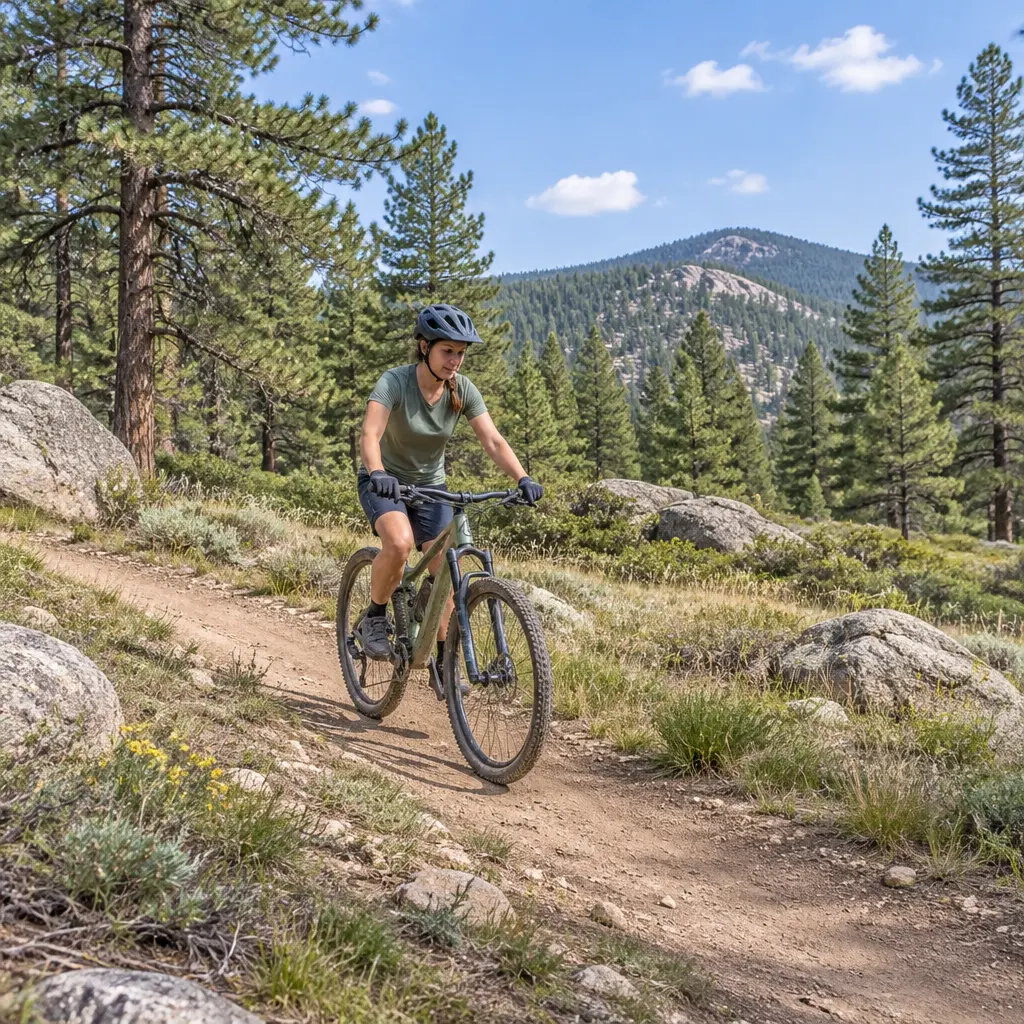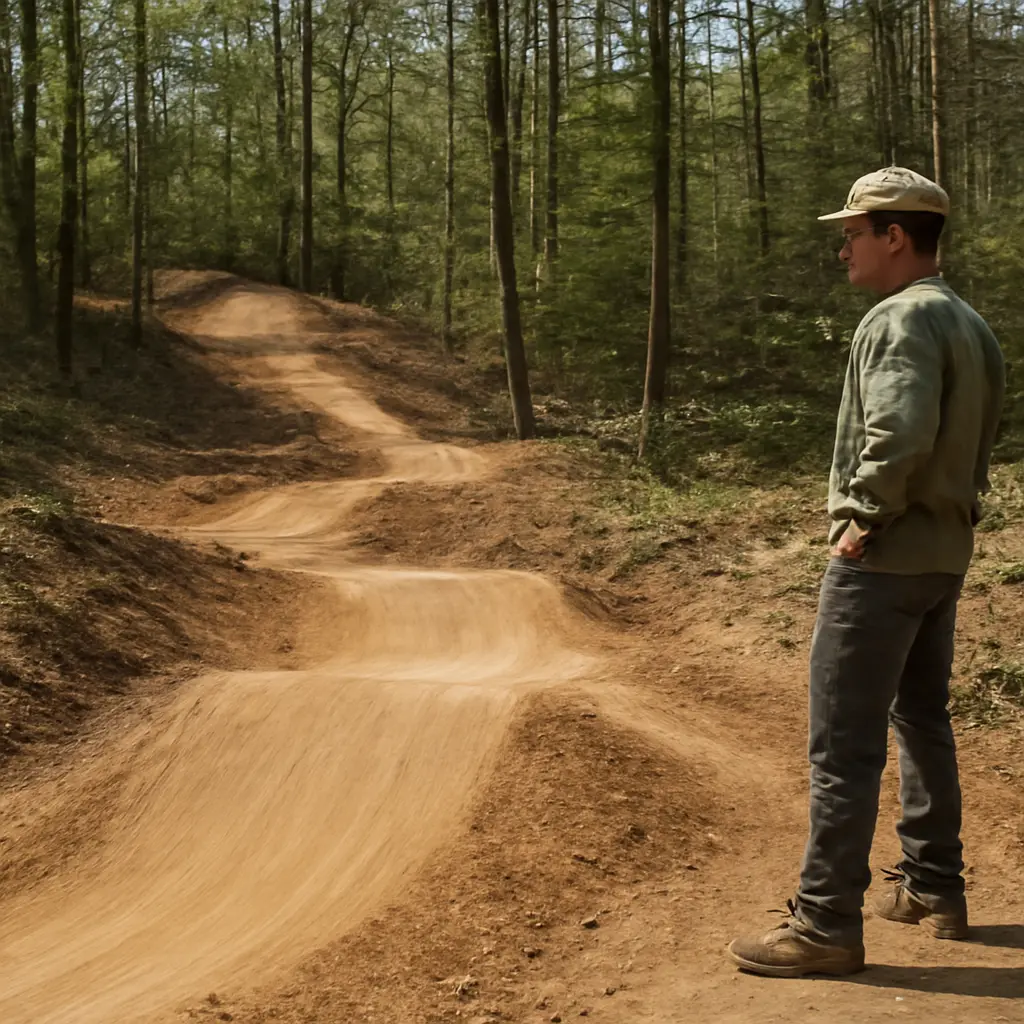
Mountain-bike trail designers create flowy jump sequences by shaping trail grade, jump spacing, takeoffs, and landings so riders can carry speed smoothly from one feature to the next. The goal is not simply to make jumps bigger: it is to let momentum do useful work while keeping the line predictable, rideable, and suited to its intended skill level. That takes careful control of geometry, soil, drainage, and sightlines, followed by field testing and maintenance. The International Mountain Bicycling Association (IMBA) describes sustainable trails as routes designed to manage water and reduce erosion; the same attention to grade and drainage is essential when a trail includes jumps. The sections below explain the design principles, feature types, safety checks, and real-world practices behind sequences that feel fast without relying on speed alone.
How Trail Designers Engineer Flowy Jump Sequences
A flowy jump sequence is a connected series of trail features that allows a rider to maintain a controlled rhythm, using the speed and trajectory from one feature to prepare for the next. “Flow” is a riding-quality term rather than a single engineering measurement: designers translate it into observable features such as consistent grades, legible sightlines, compatible jump transitions, and landings that leave room for recovery. IMBA’s guidance emphasizes matching trail difficulty to its intended users and designing sustainable grades and drainage. Those principles matter because speed magnifies small design mismatches: a landing that is too short, a poorly drained takeoff, or an abrupt change in spacing can turn a smooth sequence into a hazard.
Trail Geometry Determines Jump Flow
Trail geometry is the arrangement of grade, curvature, feature height, and distance along a riding line. Designers use it to control how a rider approaches a jump, leaves its lip, travels through the air, and reconnects with the trail. There is no universal spacing formula: rider speed, wheel size, slope, jump shape, and the intended level all affect how far a rider travels. Designers therefore test actual lines with representative riders rather than relying on a single nominal measurement.
Approach grade and speed
The approach is the trail segment that establishes a rider’s speed and body position before takeoff. A steady, readable grade helps riders judge their entry; abrupt steepening or an unexpected compression can cause speed and suspension loading to change just before the lip. Designers also account for turns, braking zones, and surface friction. A jump that works after a smooth run-in may behave differently after a tight corner, where riders arrive slower or less settled.
IMBA’s trail-design guidance treats sustainable grade, drainage, and user experience as connected design concerns. On a jump line, a moderate, consistent approach can help preserve momentum without encouraging riders to pedal or brake unpredictably at the last moment. Designers may use a rollable feature or a bypass to give riders a way through without committing to airtime.
Takeoff, flight, and landing
A takeoff, or lip, converts forward movement into an upward trajectory; the landing is the receiving surface intended to meet the rider’s tires. Their shapes must work together. A lip that is too abrupt for its audience can launch riders higher than expected, while an undersized or poorly shaped landing can leave little margin for differences in speed or technique. Designers aim for a predictable transition and a landing surface that accommodates the expected flight path rather than forcing a rider to hit one exact point.
A useful way to illustrate this relationship is a side-profile diagram showing the approach, takeoff curve, projected flight path, and landing slope. Such a drawing can help a crew discuss geometry, but it cannot replace field testing: real speed, tire grip, suspension behavior, and rider posture affect the result. IMBA’s guidance on matching difficulty to users supports building features that riders can read and approach with appropriate confidence.
Spacing and sequence rhythm
Spacing is the distance between the landing area of one feature and the approach or takeoff of the next. Designers tune it to the speed riders are likely to carry and to the time they need to stabilize, absorb a landing, or choose whether to jump again. If the next lip arrives before a rider can regain a neutral position, the sequence may feel rushed; if the gap is excessive, momentum and rhythm can disappear.
Designers often create a progression in which early features are smaller or easier to roll, then build toward larger or more demanding features. This gives riders a chance to assess the line and provides a more forgiving entry to the sequence. A trail plan can show a sequence table with feature type, approximate spacing, intended speed, and a bypass or rollable option. These are planning aids, not universal standards: the final spacing must be checked against the actual site and rider group.
Jump Types Shape Momentum and Choice
Jump features differ in how they respond to speed and how much control they offer riders. Designers choose among tables, doubles, rollers, and step-ups according to terrain, skill level, and the desired riding rhythm. The best sequence is not necessarily the one with the most airtime; it is the one whose features work together and make the intended line understandable.
Tabletops and rollable jumps
A tabletop has a flat or gently shaped top connecting its takeoff and landing. Compared with a gap jump, it reduces the consequence of falling short because the rider can potentially land on the top rather than in an open gap. A well-shaped tabletop can therefore support skill progression while still rewarding riders who generate enough speed and technique to clear it cleanly.
“Rollable” does not mean risk-free. Riders still need to manage speed and line choice, and a poorly maintained surface can become unpredictable. Designers and builders should make the intended rollable route visible and avoid placing a sudden obstacle where a rider would naturally choose to stay on the ground.
Doubles and gap jumps
A double is a jump with a gap between takeoff and landing. Because a rider must cover that gap to land as intended, the feature depends more heavily on appropriate speed, consistent technique, and clear communication of its difficulty. Doubles are generally less forgiving than tabletops, so designers should consider whether they fit the trail’s audience and whether a separate bypass or easier line is needed.
The key design question is not just whether a skilled rider can clear the gap, but whether the approach gives riders enough information to make a sound choice before reaching the lip. Sightlines, signage, a visible run-in, and an alternate route can all help. IMBA’s emphasis on matching trail challenge to user ability provides a useful framework for deciding whether a gap feature belongs on a given trail.
Rollers, rollers-to-jumps, and step-ups
Rollers are rounded trail undulations that riders can pump—using body movement to gain or preserve speed—or simply roll over. A sequence of rollers can establish rhythm before a jump, while a roller-to-jump can let riders choose between staying low and taking airtime. Step-ups rise toward the landing, allowing elevation change to be built into the feature and potentially reducing the amount of flat ground needed.
These features work best when their transitions are predictable and their drainage is deliberate. A roller that collects water may rut or lose its shape; a step-up with an unclear approach can surprise riders. Designers therefore pair feature geometry with shaping and water-management details rather than treating each mound as an isolated object.
Soil, Drainage, and Durability Protect Flow
A jump sequence only stays flowy if its surface remains stable. Soil type, compaction, rainfall, and trail grade influence whether takeoffs and landings hold their shape or develop ruts and soft spots. The U.S. Forest Service’s trail-management resources describe erosion and drainage as central concerns in sustainable trail planning. On jump lines, water that cuts across a landing can change the riding surface and undermine the geometry that builders intended.
Drainage and erosion control
Drainage design moves water off the trail before it can concentrate and erode the tread. Depending on terrain, designers may use outsloping, grade reversals, rolling dips, or other site-appropriate techniques. A grade reversal changes the trail’s vertical profile so water can leave the tread rather than run straight down it. IMBA’s sustainable-trail principles similarly stress managing water through alignment and grade rather than relying only on later repairs.
The feature itself also needs drainage. Takeoffs and landings should not form unintended bowls that trap water, and the surrounding trail should direct runoff away without creating a new erosion channel. A simple drainage illustration can show water flow across the tread and around each feature, helping builders identify where the line needs shaping before construction.
Compaction, materials, and maintenance
Compaction helps a shaped feature resist deformation, but the right construction method depends on local soil and conditions. Builders commonly shape and compact suitable material in layers, then inspect the surface after use and weather. Maintenance crews can restore lips and landings, remove loose material, close the trail when conditions are too wet, and repair drainage before small problems grow.
No single maintenance interval fits every trail. A high-use line in a wet climate may need more frequent inspection than a lightly used trail on well-drained ground. Trail managers should use observed conditions—such as rutting, standing water, exposed roots, or a changing lip profile—to decide when to repair or temporarily close a feature.
Safety, Progression, and Field Testing
Safety is built into the sequence through clear sightlines, appropriate difficulty, predictable transitions, and places to avoid a feature. Designers must consider both the intended line and likely mistakes: a rider may arrive faster or slower than expected, land short, or decide not to jump. Designing for these variations makes a trail more robust than designing only for an ideal run by an expert rider.
Progression and rider choice
Progression means arranging features so riders can develop skill gradually. A line can begin with low rollers or small tabletops, then offer larger features farther along, with bypasses where feasible. Difficulty ratings and trail signs help set expectations, but they do not replace a visible, understandable feature. Designers should consider children, newer riders, adaptive riders, and experienced riders as distinct users rather than assuming one jump size serves everyone.
A sequence may also provide multiple lines: a low route that preserves speed without jumping and a more demanding route with larger features. This choice can reduce pressure to attempt a jump simply to keep moving. The practical design objective is a trail that communicates options early enough for riders to choose deliberately.
Prototype, test, revise
Field testing is the process of riding or inspecting a built feature under controlled conditions, checking whether its speed, shape, spacing, and landing behave as intended, and revising the design. A professional crew can test at conservative speeds first, then assess the feature with riders whose abilities match the intended audience. Observations should include whether riders brake unexpectedly, arrive unsettled, land beyond the intended zone, or cannot see the next feature in time.
Testing should also include drainage and durability checks after rain and repeated use. A sequence that feels smooth on opening day may change as soil compacts, wears, or moves. Trail managers can record inspections and repairs in a simple maintenance log, noting weather, surface changes, and any incidents or near misses. This evidence-based feedback loop helps preserve the original design intent.
Conclusion: Flow Comes From Connected Design
Flowy jump sequences come from coordinating approach grade, takeoff and landing geometry, spacing, feature choice, and durable trail surfaces. Tabletop jumps, doubles, rollers, and step-ups each offer different trade-offs in momentum, airtime, and rider choice. Sustainable drainage and regular maintenance keep those shapes predictable, while progression, sightlines, bypasses, and field testing help match the line to its users. For trail organizations planning a jump line, the next step is to work with experienced designers, consult IMBA and land-manager guidance, test features with representative riders, and make inspection and repair part of the design from the start.
Sources: International Mountain Bicycling Association (IMBA), Trail Solutions: IMBA’s Guide to Building Sweet Singletrack, https://www.imba.com/resource/trail-solutions; International Mountain Bicycling Association (IMBA), Guidelines for a Quality Trail Experience, https://www.imba.com/resource/guidelines-quality-trail-experience; U.S. Forest Service, Trail Fundamentals and Trail Management Objectives, https://www.fs.usda.gov/managing-land/trails/trail-management-tools/trail-fundamentals; U.S. Forest Service, Trail Construction and Maintenance Notebook, https://www.fs.usda.gov/t-d/pubs/htmlpubs/htm07232806/