Mountain biking etiquette is the set of shared practices that help trail users pass safely, protect the environment, and keep access open. The essentials are simple: yield appropriately, communicate early, stay on designated routes, and adapt your riding to people and conditions around you. They matter because trails are shared spaces, and the International Mountain Bicycling Association (IMBA) reports that mountain bikers ride on trails alongside hikers, equestrians, and other users. The less-discussed situations—blind corners, group rides, mechanical breakdowns, muddy trails, and emergencies—are where considerate habits make the biggest difference.
Trail etiquette defines mountain biking’s shared responsibilities
IMBA’s “Rules of the Trail” describe responsible riding as a combination of yielding, staying in control, respecting closures, and leaving no trace. Etiquette is not a substitute for local regulations: trail signs and land-manager rules take precedence, and conventions can vary by region. A useful default is to ride predictably, communicate without startling others, and give more vulnerable trail users room.
Yielding depends on local rules and trail conditions
Yielding means making space safely rather than assuming another person must move. IMBA’s general guidance says bicyclists should yield to hikers and horses, and that descending riders should yield to climbing riders. However, posted rules may differ, so check signs and local guidance. Slow down well before a pass, make eye contact when possible, and ask politely which side is best. Never squeeze past someone at a cliff edge, on a narrow bridge, or where either person has limited visibility.
Passing requires warning, patience, and space
A courteous pass begins with enough distance for the other person to understand what is happening. Use a calm voice—“Rider behind; may I pass when there’s room?”—instead of relying on a bell or a high-speed approach. A bell can help, but it does not replace slowing down. Wait until the trail widens, pass at a controlled speed, and thank the person afterward. If someone does not hear you, do not startle them by brushing past.
Horses and dogs need extra consideration
Horses may react unpredictably to a fast, quiet bicycle, while dogs may be on leash, off leash where permitted, or moving across the trail. Stop or slow substantially, speak to the equestrian or handler, and follow their directions. Give animals room and avoid sudden movements. Where a dog’s position is unclear, wait rather than threading between the animal and its handler.
Communication makes shared trails safer
Good trail communication is brief, friendly, and timed to leave everyone room to react. The National Park Service advises visitors to be considerate of other users and follow posted guidance; on a bike, that means making your presence known before a close encounter, not at the last second. Communication also includes what riders do with their speed, line, and group position.
Blind corners and intersections call for a speed check
A blind corner is a place where a rider cannot see far enough ahead to stop safely if another user appears. Reduce speed before entering it, stay on your side of the trail where practical, and avoid cutting across the outside edge. At intersections, pause if sightlines are poor and yield according to signs. A bell or brief call can warn others, but riding at a speed that allows a controlled stop is the more important safeguard.
Group rides should leave room for everyone
A group ride is a moving gathering, so its riders share responsibility for not overwhelming the trail. Keep the group compact without blocking the full width, let faster users pass where there is room, and avoid bunching at narrow sections. Call out hazards in a measured way and pass the message along without shouting unnecessarily. Before starting, agree on regrouping points so slower riders are not pressured to ride beyond their ability.
A stopped rider should make the trail easier to use
For a flat tire, adjustment, or rest, move completely off the riding line where it is safe to do so. Keep bikes and gear out of the way, especially near corners, intersections, and narrow bridges. If someone is stopped ahead, slow down and ask whether they need help; do not assume a mechanical problem is an invitation to crowd them. Offer assistance without pressuring the rider to accept it.
Trail stewardship protects routes and access
Trail stewardship means choosing actions that limit damage to soil, vegetation, and the trail network. IMBA promotes responsible recreation and sustainable trail design, while the U.S. Forest Service emphasizes following area-specific rules and avoiding resource damage. These principles connect everyday etiquette to the long-term availability of riding opportunities.
Wet-trail decisions depend on soil and local guidance
A wet trail is not automatically closed, but riding when soil is saturated can leave ruts, widen the route, and damage trail features. The right decision depends on soil type, drainage, weather, and local land-manager advice. If tires are leaving deep tracks or the surface is deforming, turn around or choose a more durable route. Do not ride around mud into vegetation: that can turn a narrow trail into a wider, damaged corridor.
Stay on designated routes and respect closures
A designated trail is a route approved for use by the relevant land manager; a closure may protect wildlife, repair work, public safety, or fragile habitat. Follow signs and current notices even when a shortcut or closed segment looks rideable. Do not create new lines around obstacles or switchbacks. The National Park Service and U.S. Forest Service both advise visitors to follow local regulations, which may specify where bicycles are allowed.
Leave no trace includes waste, noise, and trail features
Leave-no-trace riding means packing out wrappers, tubes, and other waste; keeping noise at a considerate level; and not altering trail features without authorization. Avoid skidding as a routine way to control speed, since repeated skids can loosen soil and accelerate erosion. Do not move rocks, build jumps, or reshape drainage without permission from the trail organization or land manager.
Preparation and emergencies are part of etiquette
Prepared riders reduce the likelihood that a small problem becomes a burden or hazard for others. The International Mountain Bicycling Association’s guidance encourages riders to plan ahead, carry appropriate supplies, and know the route. Preparation is especially important because remote trails can have limited phone service and delayed assistance.
Ride within your ability and plan for the route
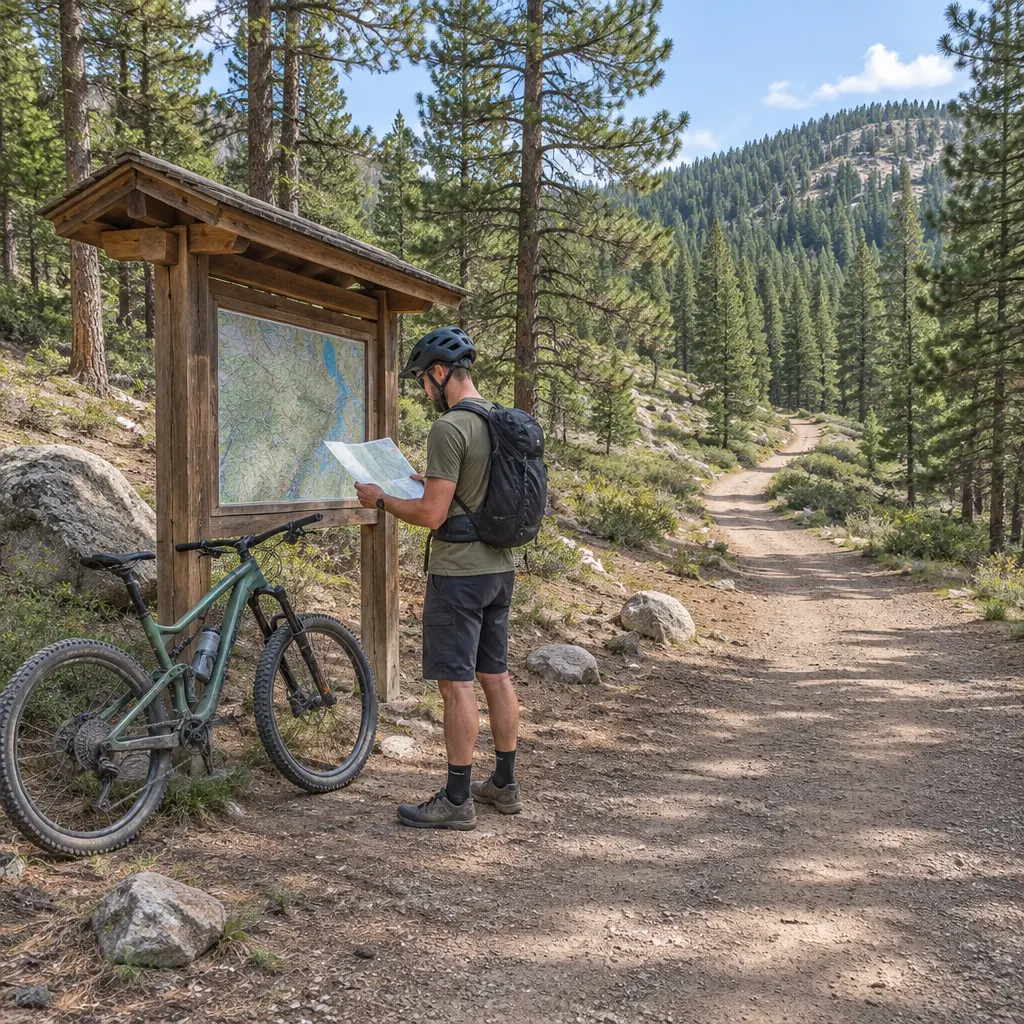
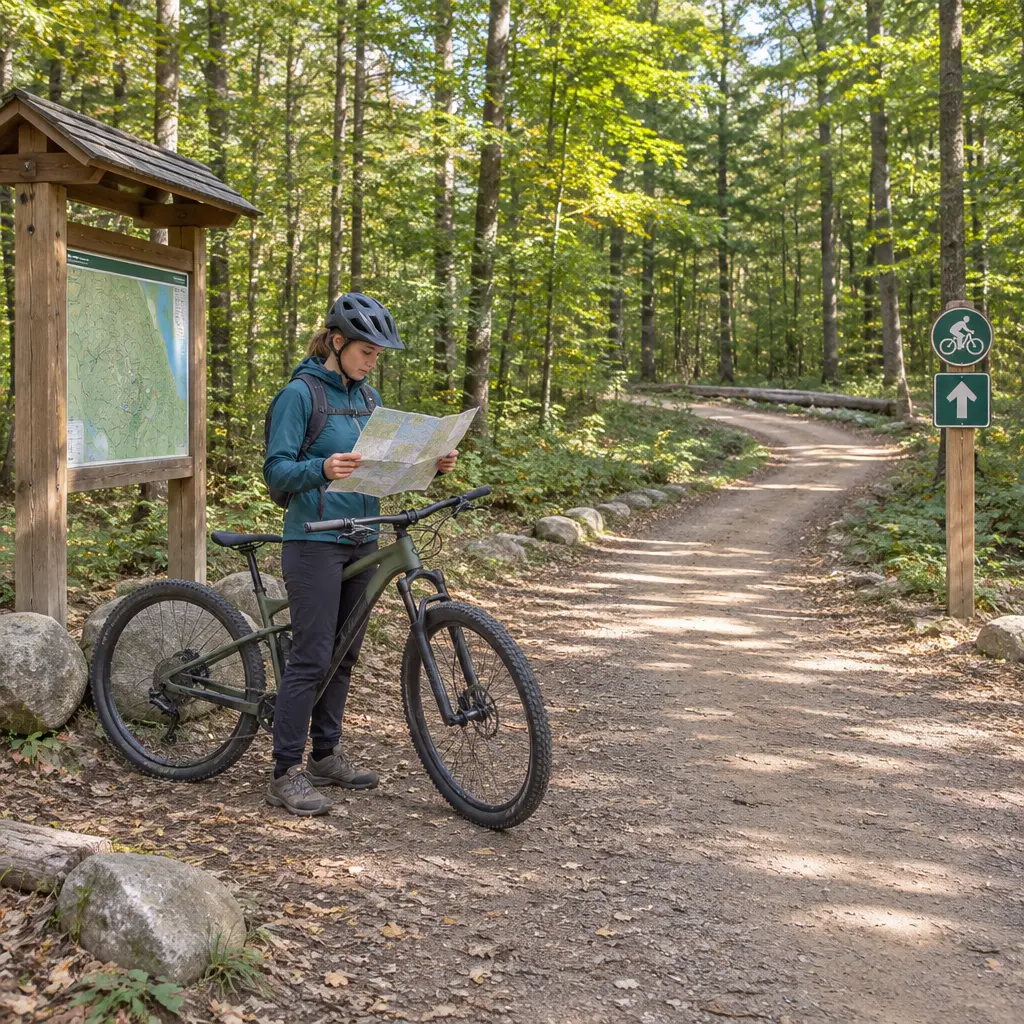
Before setting out, check the trail’s difficulty, distance, elevation, weather, access rules, and expected daylight. Carry water, basic repair supplies, and clothing appropriate to conditions; take more for longer or remote rides. If a feature is beyond your comfort or skill, dismount and walk it when safe. No rider owes an audience a risky attempt, and walking a section is better than creating a collision or rescue situation.
Respond to injuries without creating a second hazard
If someone is injured, stop in a safe place, alert others approaching, and assess whether emergency services are needed. Do not move a person with a possible serious head, neck, or back injury unless there is immediate danger. Share the location as accurately as possible, including trail name, junctions, and nearby landmarks. The American Red Cross recommends calling emergency services for serious emergencies and providing first aid only within your training.
After a near miss, reset rather than escalate
A near miss can leave people startled or frustrated. Stop somewhere safe, acknowledge what happened, and discuss the immediate issue calmly if useful. Avoid insults, threats, or filming someone to shame them. If a route has a persistent hazard or a serious access problem, report it to the trail organization or land manager with a clear location and factual description.
Conclusion: considerate riding keeps trails welcoming
Mountain biking etiquette comes down to sharing space, communicating early, protecting the trail, and preparing for the unexpected. Yield according to local rules, pass only when it is safe, give animals and groups extra room, and leave damaged or closed trails alone. Before your next ride, check land-manager guidance, carry basic repair and emergency supplies, and choose a pace that lets you respond to what is ahead. Those small choices help protect both trail access and the people who use it.
Sources: International Mountain Bicycling Association, Rules of the Trail, https://www.imba.com/resource/rules-of-the-trail; International Mountain Bicycling Association, Ride, https://www.imba.com/ride; National Park Service, Hiking Safety, https://www.nps.gov/articles/hiking-safety.htm; U.S. Forest Service, Know Before You Go, https://www.fs.usda.gov/visit/know-before-you-go; Leave No Trace, The Seven Principles, https://lnt.org/why/7-principles/; American Red Cross, First Aid Steps, https://www.redcross.org/take-a-class/first-aid/performing-first-aid/first-aid-steps