
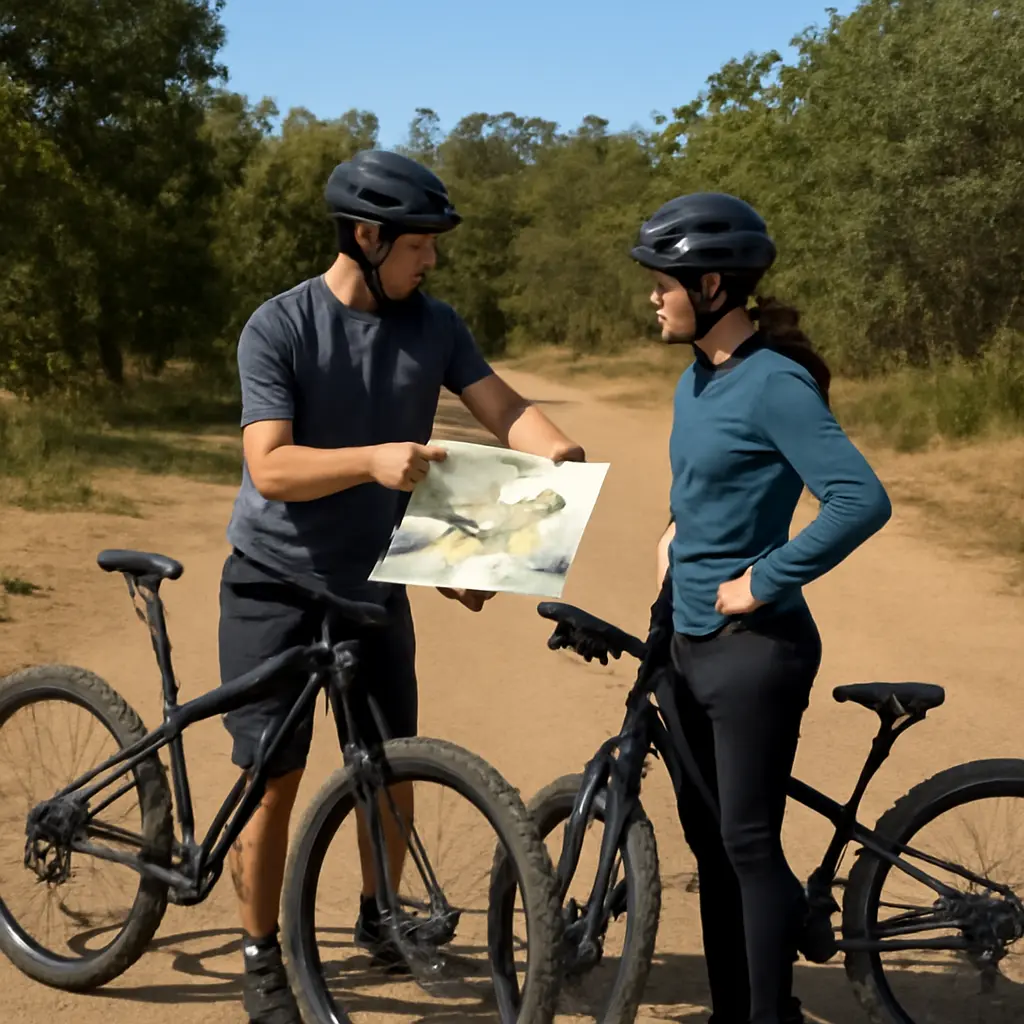
Matching riders by ability means grouping people whose current skills, fitness, confidence, and expectations fit the same route and pace. It is one of the most practical ways to prevent a trail ride from becoming unsafe, exhausting, or miserable: the International Mountain Bicycling Association (IMBA) advises ride leaders to choose routes suited to the least experienced participant, while the U.S. Forest Service emphasizes matching trail choices to skill and conditions. The key is to assess more than a rider’s self-described level. This guide explains how to define and compare ability, build compatible groups, choose suitable trails, and respond when a ride’s difficulty proves too high.
Group compatibility reduces trail-day risk
A compatible group is not necessarily made up of riders with identical experience. It is a group whose members can safely handle the planned terrain, maintain a workable pace, and communicate about discomfort or changing conditions. A mismatch can create predictable problems: faster riders may pressure others, slower riders may feel rushed, and the group may become spread out or lose contact. On remote trails, that separation can complicate navigation, mechanical support, and emergency response.
There is no single universal statistic showing how many trail incidents are caused by mismatched ability. Incident records often do not classify skill mismatch as a distinct factor. It is therefore more accurate to treat rider matching as a practical risk-control measure, not a guarantee against crashes. Weather, trail conditions, equipment, fatigue, and decision-making still matter.
Rider ability combines skill, fitness, and confidence
For a group ride, “ability” is a working assessment of what someone can comfortably and consistently do on the specific type of ride being planned. IMBA’s trail guidance encourages riders to select routes appropriate to their skills and to account for trail conditions. In practice, a useful assessment considers technical control, aerobic endurance, familiarity with the terrain, and confidence under pressure—not simply years of riding or the bike a person owns.
Ability is also context-dependent. A rider who is comfortable on dry, familiar singletrack may be less capable on wet roots, loose descents, exposed traverses, or unfamiliar trails. Trail ratings help communicate expected difficulty, but they are not a promise that every feature will feel manageable to every rider.
Technical skill and trail features
Technical skill includes braking, cornering, gear choice, balance, and the ability to manage obstacles such as rocks, roots, drops, and narrow turns. Before choosing a route, describe its features plainly rather than relying only on labels such as “intermediate.” A ride with sustained rocky descents may demand more control than a similarly rated route with smoother, rolling terrain.
The U.S. Forest Service’s trail information and local trail signage can help riders understand route difficulty, but ratings vary across locations. Leaders should check the managing agency’s descriptions and recent trail reports, then explain any sections where walking is a normal option.
Fitness, pace, and recovery
Fitness affects how well riders sustain effort, recover after climbs, and make decisions when tired. Two riders with similar technical skills may have very different experiences on a long route with substantial elevation gain. Share the expected distance, climbing, duration, and likely pace before the ride, and ask whether participants are comfortable with those demands.
A slower pace is not automatically a problem; the issue is whether the route and schedule allow the whole group to ride without pressure. Build in regrouping points and enough time for breaks. If the planned ride depends on everyone maintaining a demanding pace, it is not a suitable mixed-ability outing.
Confidence and willingness to continue
Confidence describes how prepared a rider feels to attempt a feature or continue in a particular environment. It can change during a ride as fatigue, weather, or trail exposure increases. A rider may possess the physical skill to negotiate an obstacle but reasonably choose to walk it. Treating that choice as normal helps people communicate early instead of taking risks to avoid embarrassment.
A useful pre-ride question is not merely “What level are you?” Ask what terrain the rider enjoys, what they prefer to avoid, and whether they are comfortable walking challenging sections. Specific answers are more actionable than broad labels.
Matching riders starts before the trailhead
Once the group’s range is understood, the leader can match the route, pace, and group structure to the riders. This is where clear planning prevents avoidable surprises. IMBA’s ride-leader resources stress preparation, communication, and attention to the group; those principles apply whether the outing is an informal weekend ride or an organized event.
Describe the ride in measurable terms
An invitation should state distance, climbing, estimated duration, surface and technical features, regrouping plan, and expected pace. Include a description of the most challenging section, not just the easiest miles. When possible, identify a shorter loop or a safe exit point so riders know the alternatives before setting out.
Trail difficulty systems can support this description. The International Trail Marking System used by many mountain-bike destinations progresses from easier green-circle routes through blue-square and black-diamond levels, with some locations using double-black ratings. These symbols are useful shorthand, but local standards and trail conditions differ, so pair the rating with a feature-based description.
Use a skills check, not a status label
A short, low-consequence warm-up can reveal whether riders are comfortable with basic braking, turns, starts, and stops before the group commits to difficult terrain. It should be supportive rather than an audition. The purpose is to confirm that the planned ride fits and to adjust early if it does not.
Leaders can also ask riders to describe recent rides they enjoyed and the terrain they handled comfortably. Concrete experience gives a better planning signal than labels such as “beginner,” “advanced,” or “expert,” which people interpret differently.
Set group roles and regrouping rules
A lead rider can manage navigation and pace while a designated sweep rider stays with the last participant. Agree on intersections and regrouping points, and make clear that nobody should be left behind without an explicit plan. For larger groups, splitting into smaller pace groups may work better than asking everyone to ride at the same speed.
These practices reduce separation, but they do not replace basic preparation. Riders should carry appropriate water, clothing, repair supplies, and communication equipment for the route and conditions. The Forest Service recommends planning ahead and being prepared for changing outdoor conditions.
Trail choice and conditions can change the match
A rider-group match is only as sound as the route and conditions considered. Rain can make surfaces slippery, heat can increase fatigue, and closures or maintenance can alter the planned route. The National Weather Service advises people recreating outdoors to account for hazards such as heat and thunderstorms; leaders should check forecasts and local land-manager notices before departure.
Choose the route for the group, not the strongest rider
The strongest or most technically skilled participant should not set the route standard for everyone else. Select a route that the least experienced rider can manage with reasonable support, while still offering an enjoyable challenge. If riders want different levels of difficulty, organize separate routes or a planned split and reunion rather than improvising once the group is committed.
For example, a group with one confident descender and several riders new to rocky trails might choose a smoother loop with optional features. The more experienced rider can take those features only when the route design permits a safe, clearly communicated regrouping point.
Adjust when conditions or energy change
A good plan remains flexible. If a rider becomes fatigued, conditions deteriorate, or the group is taking much longer than expected, shorten the route or use a known exit. Continuing merely because the original plan said so can turn manageable discomfort into poor judgment or an emergency.
Leaders should also normalize stopping to eat, drink, layer up, or assess a mechanical problem. The Centers for Disease Control and Prevention recommends taking precautions in hot weather, including pacing activity and drinking fluids. Specific needs vary by person and conditions, so riders should follow relevant medical advice and local safety guidance.
A simple planning checklist prevents avoidable mismatches
Before the ride, use a short checklist to turn general good intentions into decisions:
- Share the route’s distance, elevation gain, duration, technical features, and likely conditions.
- Ask participants about recent riding experience, preferred pace, and terrain they would rather avoid.
- Check trail status, weather, closures, and local difficulty descriptions.
- Choose a route and schedule that allow the least experienced participant to ride comfortably.
- Agree on the lead, sweep, regrouping points, communication plan, and walk-or-turn-back options.
- Reassess during the ride and change the plan when fatigue, weather, or confidence calls for it.
A useful visual aid for a club or event is a ride-planning chart with four columns—technical difficulty, fitness demand, confidence demands, and route options. Such a chart can make mismatches visible before sign-up and help riders choose an appropriate outing without treating ability as a judgment of personal worth.
Conclusion: compatible groups make better trail days
Matching riders by technical skill, fitness, and confidence helps leaders select realistic routes, set a workable pace, and create a plan for regrouping or changing course. Trail ratings and rider labels are useful starting points, but specific descriptions and honest conversations are more reliable. Conditions can change, so the group must remain willing to shorten a ride or walk a feature.
Before your next outing, describe the ride clearly, ask participants about their comfort and experience, and choose a route that does not depend on anyone riding beyond their limits. Those small steps cannot eliminate every hazard, but they make it much less likely that a preventable mismatch will define the day.
Sources: International Mountain Bicycling Association, Ride Guide: A Guide to Leading Group Rides, https://www.imba.com/resource/ride-guide; International Mountain Bicycling Association, Trail Difficulty Ratings, https://www.imba.com/resource/trail-difficulty-ratings; U.S. Forest Service, Mountain Biking, https://www.fs.usda.gov/visit/know-before-you-go/mountain-biking; U.S. Forest Service, Outdoor Safety and Ethics, https://www.fs.usda.gov/visit/know-before-you-go; National Weather Service, Heat Safety, https://www.weather.gov/safety/heat; Centers for Disease Control and Prevention, Heat and Health, https://www.cdc.gov/heat-health/


